Canada at a glance
| Best months | December to March; January to March generally provides the most dependable snow, frozen-lake and ski conditions, depending on region |
| Typical winter temperatures | Highly regional: about 0°C on the Pacific coast to -25°C or below in the Rockies and northern territories; Arctic cold snaps can be substantially lower |
| Currency | Canadian dollar (CAD) |
| Approximate seven-day ground budget | CAD 690–1,900 (approx. £370–£1,010) per person, excluding international flights |
| Winter Experience Score | 8.8/10: snow 9.5, nature and wilderness 10, winter experiences 9.5, uniqueness 8.5, value 6.5 |
| Best for | Rockies scenery, skiing, frozen lakes, boreal wilderness, Northern Lights and seasonal Arctic wildlife |
| Main winter destinations | Banff and Lake Louise, Whistler, Quebec City and Charlevoix, Yellowknife and Churchill |
Canada cannot be reduced to one winter climate. The Pacific mountains, Rockies, eastern cities and northern territories differ sharply in temperature, snow, daylight and trip style.
Why visit Canada in winter?
Canada's defining advantage is scale. The strongest winter regions cover mountain ranges, conifer forests, frozen lakes, cities, boreal landscapes and Arctic environments. That range produced maximum marks for nature and wilderness in the base score and second place in both the Wilderness and Adventure rankings.
The Rockies are the clearest visual anchor. Banff and Lake Louise combine mountain terrain with frozen-lake scenery and established skiing, while Whistler represents the Pacific mountain and resort side of the country. Farther east, Quebec City and Charlevoix create a more cultural winter built around urban atmosphere, festivals and regional landscapes. In the north, Yellowknife shifts the focus to aurora, dog sledding and deep cold; Churchill adds the seasonal wildlife dimension.
Canada also supports different levels of intensity. A traveller can organise a resort-centred ski week, build a mixed city and nature holiday, or choose a specialist northern programme. Downhill skiing, snowboarding, cross-country skiing, snowshoeing, dog sledding, skating and wildlife experiences give the country one of the broadest outdoor menus in the comparison.
Principal strengths: huge landscape variety; world-class ski infrastructure; long snow seasons inland and in the north; strong aurora potential in the northern territories; and credible choices for both urban and wilderness travel.
Principal trade-offs: leading destinations are far apart; inland and northern cold can be severe; mountain driving requires appropriate preparation; and remote travel, ski costs and guided activities can move the total well beyond a general country budget.
Best winter destinations in Canada
These destination summaries remain at country level. They explain the strongest use of each place without inventing local budgets, detailed routes or temperature figures.
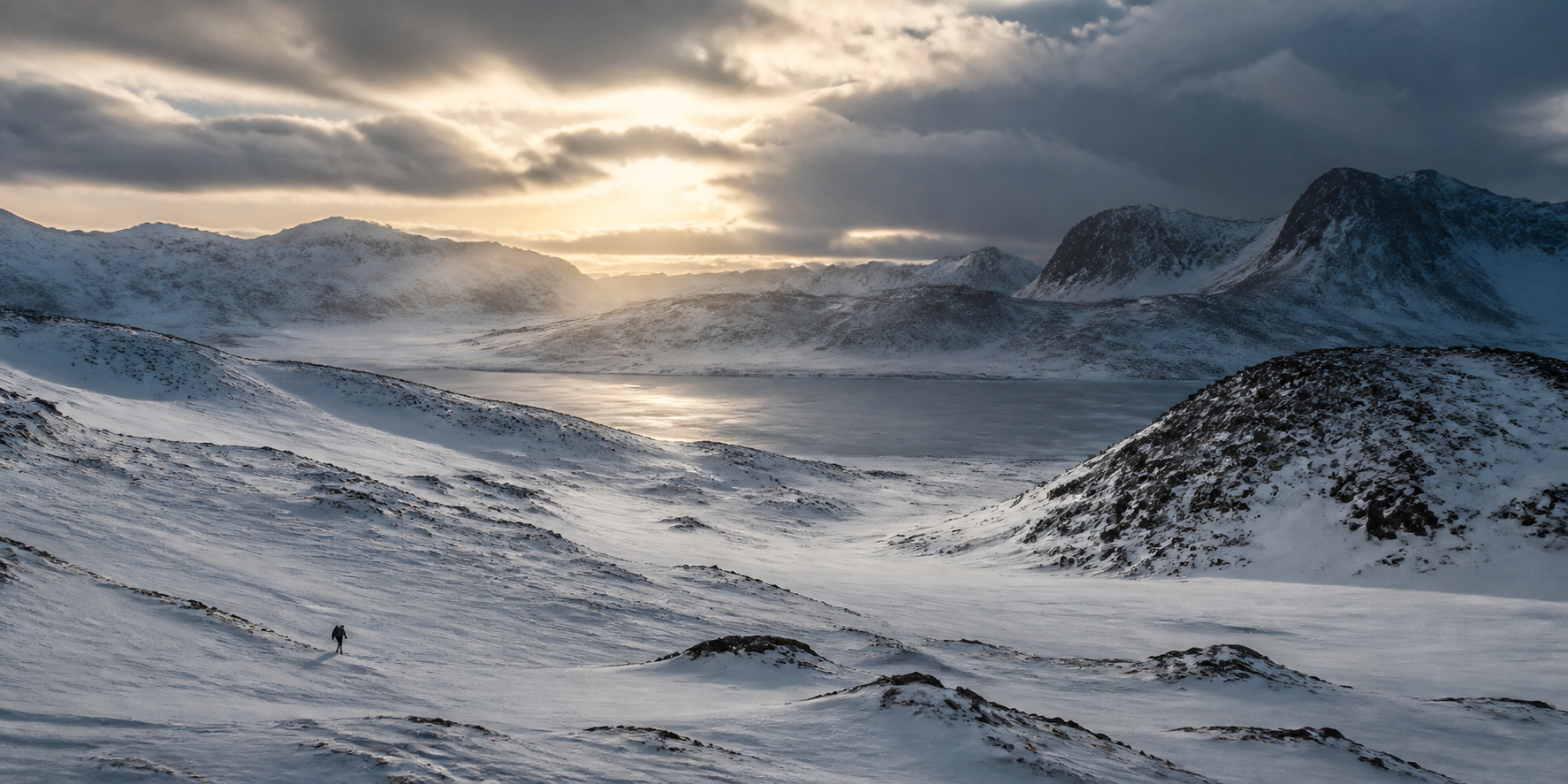
Banff and Lake Louise
Banff and Lake Louise are the main choice for a classic Canadian Rockies winter. Snowy mountains, forests and frozen-lake environments support skiing, snowboarding, snowshoeing and landscape photography. The area is best for travellers who want dramatic wilderness scenery while retaining established visitor infrastructure.
Its strength is breadth rather than one unusual activity: mountain sport, skating where officially open, winter walking and scenic days can share one regional stay. Traveller discussions nevertheless stress that mountain conditions and driving deserve serious attention.
Whistler
Whistler is the leading Pacific mountain option in the existing destination list. It is best used for a major ski or snowboard holiday, with the scale of the resort and surrounding mountain environment carrying the trip. Compared with inland and northern Canada, the broader Pacific setting has a different temperature and snow profile, so national averages are not useful planning tools.
Whistler suits travellers prioritising developed snow sport more than Arctic remoteness or aurora. Lift access, equipment and peak accommodation can also place the real total above the basic country benchmark.
Quebec City and Charlevoix
Quebec City and Charlevoix provide Canada's strongest culture-led winter option in this guide. The pairing works for travellers who want winter festivals, food, historic urban atmosphere and regional scenery alongside outdoor activities. It offers a meaningful alternative to a ski-only or far-northern itinerary.
This is the best-use choice for a mixed trip in which city experience matters as much as wilderness. It should not be treated as interchangeable with the Rockies or Yellowknife, because the reason to visit is the combination of culture and winter rather than maximum mountain scale.
Yellowknife
Yellowknife is Canada's clearest Northern Lights destination in the existing record. Boreal forest, frozen lakes, deep cold and northern skies create a powerful aurora setting, with dog sledding and other winter activities adding substance when the lights are weak or absent.
It is best for a dedicated northern trip rather than an easy extension of Banff, Whistler or eastern Canada. Aurora remain dependent on cloud and solar conditions, and guided outings plus travel to the north can be expensive.
Churchill
Churchill represents Canada's Arctic wildlife side. It is most relevant to travellers whose winter interests extend beyond snow sport and aurora into seasonally available wildlife experiences and remote northern landscapes. This specialist focus gives Canada additional uniqueness within a broad winter portfolio.
Churchill is not presented as a general substitute for the Rockies or Yellowknife. The best use is a planned wildlife-oriented trip whose timing and activities follow the appropriate seasonal programme.
Best winter experiences
- Ski or snowboard in the mountains: The Rockies and Pacific ranges underpin Canada's world-class snow-sport reputation.
- See the Northern Lights in the north: Yellowknife is the primary destination in this guide, with frozen lakes and boreal landscapes creating strong foregrounds.
- Skate outdoors where officially open: Rinks and suitable frozen-lake settings provide a distinctly Canadian winter experience, subject to local operating conditions.
- Try dog sledding: Northern and mountain programmes add active travel through snowy landscapes.
- Snowshoe or cross-country ski: These activities open forests, lake environments and quieter terrain beyond downhill resorts.
- Experience winter festivals: Quebec adds a cultural counterweight to the country's mountain and wilderness strengths.
- Plan a seasonal wildlife trip: Churchill brings a specialist Arctic dimension that should be timed to the relevant wildlife season.
When to go
December to March is the broad winter window. January to March generally brings the most dependable combination of ski snow, frozen landscapes and northern winter, but the best dates depend on whether the priority is the Rockies, Pacific mountains, eastern culture, aurora or wildlife.
Regional differences matter more than a national average. The Pacific coast can be near freezing while northern communities are below -25°C, and Arctic cold snaps can be much lower. Travellers should choose the destination first and then match clothing, daylight expectations and activities to that region.
A one-region plan also protects usable holiday time. Banff and Lake Louise can anchor a Rockies week, Quebec can support an urban-and-regional winter, and Yellowknife can carry a northern itinerary without adding a second cross-country objective. This is more realistic than treating every headline destination as a stop on one route.
Winter costs
The existing seven-day ground benchmark is CAD 690–1,900 (approx. £370–£1,010) per person, excluding international flights. It is a broad budget-to-mid-range national range rather than a quote for a complete ski or northern package.
Ski passes, car hire, mountain accommodation, domestic flights and travel to northern communities can increase costs substantially. Guided aurora and wildlife programmes add further expense. No separate figures are assigned to Banff, Whistler, Quebec, Yellowknife or Churchill because destination-level budgets have not been established.
Practical UK entry information
British citizens normally do not need a visa for short visits of up to six months. An electronic travel authorisation is generally required when arriving by air, but not when arriving by land or sea. The passport must be valid for the planned stay.
This is a concise summary of the current country record, not a substitute for checking official requirements immediately before travel. Entry formalities do not affect Canada's Winter Experience Score.
What travellers say
Travellers praise the Canadian Rockies and northern territories for large-scale scenery, skiing, dog sledding and aurora viewing. Banff discussions focus on mountain landscapes and winter sport, while Yellowknife reports emphasise the northern atmosphere and the appeal of planning other activities around aurora nights.
The recurring cautions are equally clear. Destinations are far apart, regional conditions differ sharply, and northern trips combine high costs with severe cold. Mountain-driving discussions repeatedly warn against treating a long Vancouver-to-Banff winter route as an ordinary road trip. These points are aggregated from existing public discussions rather than direct quotations.
Where Canada ranks
Canada is third overall and second for snow, wilderness and adventure. Its lower fifth place in photography reflects overlap between some mountain, forest and aurora motifs and those of other northern countries, not weak scenery.
| Ranking | Position | Score |
|---|---|---|
| Winter tourism | #3 | 8.8/10 |
| Snow and a real winter | #2 | 9.6/10 |
| Northern Lights winter trip | #4 | 8.9/10 |
| Winter wilderness | #2 | 9.6/10 |
| Winter adventure | #2 | 9.5/10 |
| Winter photography | #5 | 9.3/10 |
FAQ
Is Canada good for a winter holiday?
Yes. Canada ranks third overall and is especially strong for wilderness, skiing, frozen lakes and northern experiences. It works best when one region anchors the itinerary rather than attempting to cross the country.
What is the best winter destination in Canada?
Banff and Lake Louise are the strongest all-round choice for Rockies scenery and snow sport. Choose Whistler for a major Pacific ski trip, Yellowknife for aurora, Quebec for culture or Churchill for specialist wildlife.
When is the best time to visit Canada for snow?
January to March generally offers the most dependable broad winter conditions. Exact timing still depends on region, elevation and whether the priority is skiing, frozen lakes, aurora or wildlife.
Where can I see the Northern Lights in Canada?
Yellowknife is the main aurora destination in this guide. Its northern location, boreal surroundings and frozen landscapes create a strong setting, but cloud and solar activity still determine individual sightings.
How much does a winter trip to Canada cost?
The broad seven-day ground benchmark is CAD 690–1,900 (approx. £370–£1,010) per person, excluding international flights. Ski passes, vehicles, domestic flights and guided northern programmes can raise the total substantially.
Is Canada suitable for non-skiers in winter?
Yes. Aurora trips, dog sledding, skating where officially open, snowshoeing, festivals, frozen-lake scenery and seasonal wildlife provide substantial alternatives. Quebec is especially relevant when culture matters as much as outdoor sport.
What is Canada's biggest winter-planning challenge?
Distance is the main challenge. Banff, Whistler, Quebec, Yellowknife and Churchill are not one compact route, and a complete multi-region itinerary can require domestic flights or long winter drives.
Sources & notes
Facts and traveller sentiment were checked on 20 August 2026. This page uses only the existing Canada references:
- Canada entry requirements
- Canadian Climate Normals 1991–2020
- Destination Canada winter overview
- Canada travel costs
- Yellowknife traveller discussion
- Canada winter-trip discussion
- Vancouver-to-Banff winter-driving discussion
GBP equivalents are approximate and use exchange rates checked on 20 August 2026. Actual exchange rates may vary.