Ranking table
| Rank | Country | Score | Best for |
|---|---|---|---|
| 1 | Iceland | 9.8/10 | Volcanic and glacial contrasts, ice caves and landmark-rich routes |
| 2 | Russia | 9.7/10 | Transparent ice, snow-covered volcanoes and Arctic or Siberian scale |
| 3 | Japan | 9.5/10 | Snow monsters, deep powder, wildlife and winter culture |
| 4 | Norway | 9.4/10 | Aurora above fjords, Arctic coast and mountain light |
| 5 | Canada | 9.3/10 | Rockies, frozen lakes, boreal aurora and winter wildlife |
| 6 | Finland | 8.5/10 | Snow-laden forests, reindeer and aurora over frozen lakes |
How we ranked the countries
The Winter Photography Score compares the strongest relevant winter regions rather than averaging conditions across an entire country. It gives 35% to visual uniqueness, 25% to the variety of winter landscapes, 20% to signature winter phenomena and landmarks, 10% to snow or ice quality and 10% to wilderness atmosphere. Component scores use a 1–10 scale in half-point steps, with the weighted total rounded to one decimal place.
The ranking rewards photographic strength and variety, not convenient transport or guaranteed weather. Timing still matters: aurora need dark skies, Baikal ice is seasonal, Icelandic ice caves require professional assessment and coastal conditions change rapidly.
1. Iceland — 9.8/10
Why it ranks here
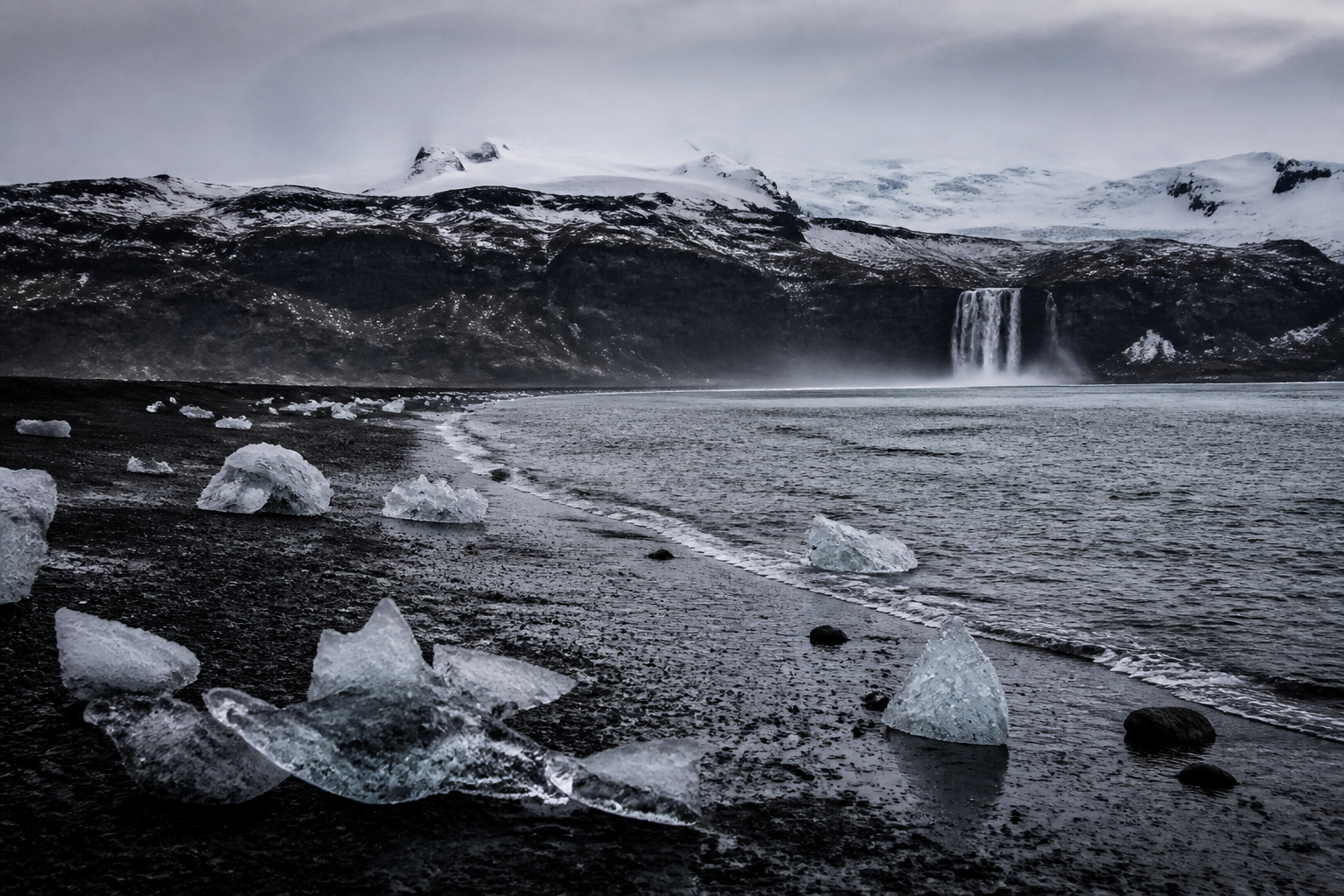
Iceland takes first place for its concentrated collection of distinctive winter landscapes. Around the South Coast and Vatnajokull, glacial ice and seasonal caves sit close to black beaches, waterfalls and ice-cap views. Jokulsarlon adds icebergs, while geothermal areas introduce geysers, steam and volcanic ground.
This combination earns maximum scores for visual uniqueness, variety and signature subjects. Snaefellsnes adds mountain, coast and lava-shaped terrain, while aurora can add another layer. Iceland leads through contrasts between ice, dark rock, ocean and geothermal features, despite inconsistent coastal snow and developed headline locations.
Best for
- Glacial ice against black coast and volcanic terrain
- Seasonal ice caves, waterfalls and iceberg imagery
- A varied landmark route within one relatively compact country
Pros / Cons
- Pros: Exceptional concentration of recognisable subjects; strong glacial, coastal, volcanic and geothermal contrasts; varied scenes without continent-scale journeys.
- Cons: Wind and roads change quickly; coastal snow is less reliable; famous landmarks may be busy and guided ice access is costly.
Practical snapshot
- Best months: November to March, with the exact balance of daylight, ice-cave access, aurora darkness and road conditions changing through the season.
- Approximate seven-day ground budget: ISK 96,000–223,000 (approx. £580–£1,340) per person. Guided ice-cave or glacier trips, a suitable vehicle and accommodation near key locations can increase the total.
- Entry requirements: See the country winter guide for current UK entry information.
What travellers say
Winter visitors praise the rapid visual changes between glaciers, waterfalls, dark coast and geothermal water. Difficult weather adds atmosphere but is the main constraint. Wind, cloud or road closures can remove a planned location, so flexible routes work better than rigid shot lists.
2. Russia — 9.7/10
Why it ranks here
Russia ranks second with the widest geographic range, although its signature subjects are far apart. Lake Baikal is the photographic anchor: established winter ice can show transparency, deep cracks, pressure ridges, snow textures and caves at immense scale.
Kamchatka adds volcanoes, deep snow, steam and thermal water; Kola Peninsula & Murmansk adds tundra, Barents coast, Khibiny terrain, aurora and polar-night light. Altai & Siberia contributes continental mountains, while Karelia brings forests and frozen lakes. These are separate trips; the practical snapshot uses Baikal as the leading ice subject.
Best for
- Transparent lake ice, cracks, ridges and ice caves
- Snow-covered volcanoes and remote Far Eastern scenery
- Large-scale Arctic, Siberian, mountain and taiga imagery
Pros / Cons
- Pros: Outstanding variety across five regions; strong snow, ice and wilderness atmosphere; genuinely distinctive Baikal and Kamchatka subjects.
- Cons: Leading regions need separate trips; ice and remote terrain require local expertise; cold and limited daylight constrain field time.
Practical snapshot
- Best months: December to March overall; February and March are the main focus for established Baikal ice, while the preferred timing differs for Kola aurora and Kamchatka snow.
- Five-day Lake Baikal ground benchmark: Approximately RUB 55,000–120,000 (approx. £480–£1,040) per person, based on a winter stay using organised ice access and mid-range services. Private transport, specialist photo guiding and longer Olkhon routes can push the total higher.
- Entry requirements: See the country winter guide for current UK entry information.
What travellers say
Baikal visitors highlight the clarity, cracks and changing textures of the ice, as well as its scale. Kamchatka travellers focus on deep snow, volcanoes and thermal water, while Kola discussions value aurora and Arctic coast. Ice appearance varies, safe routes need local knowledge and distant regions require separate trips.
3. Japan — 9.5/10
Why it ranks here
Japan combines superb snow with singular subjects. Zao's juhyo—trees transformed by heavy snow and ice—create a surreal landscape. Nagano's snow monkeys add wildlife, while Hokkaido and the Japanese Alps supply powder forests, volcanic mountains and snow-country settlements.
Onsen steam, ryokan, food, shrines and villages give the winter story a cultural identity. Japan receives maximum scores for signature phenomena and snow quality, but its landscape range is narrower and much of the experience centres on established destinations.
Best for
- Snow monsters and snow monkeys
- Deep-powder forests and mountain action
- Combining natural subjects with winter culture
Pros / Cons
- Pros: Exceptionally expressive snow; unique wildlife and snow forms; strong cultural context; a good range from action to quiet scenes.
- Cons: Peak resorts and viewpoints can be busy; snowfall may hide mountains; specialist subjects require regional travel.
Practical snapshot
- Best months: January and February for the strongest powder and deep-winter look; regional seasons can extend from December into March or April.
- Approximate seven-day ground budget: JPY 60,000–152,000 (approx. £280–£710) per person. Equipment, lift access, specialist guiding and travel between Hokkaido, Tohoku or Nagano can raise the real photography budget.
- Entry requirements: See the country winter guide for current UK entry information.
What travellers say
Winter travellers praise light powder, snowy forests and the contrast between outdoor cold, onsen and regional food. The visual experience changes considerably between Hokkaido, the Japanese Alps and Tohoku. Crowds and uncertain visibility during snowfall are recurring drawbacks.
4. Norway — 9.4/10
Why it ranks here
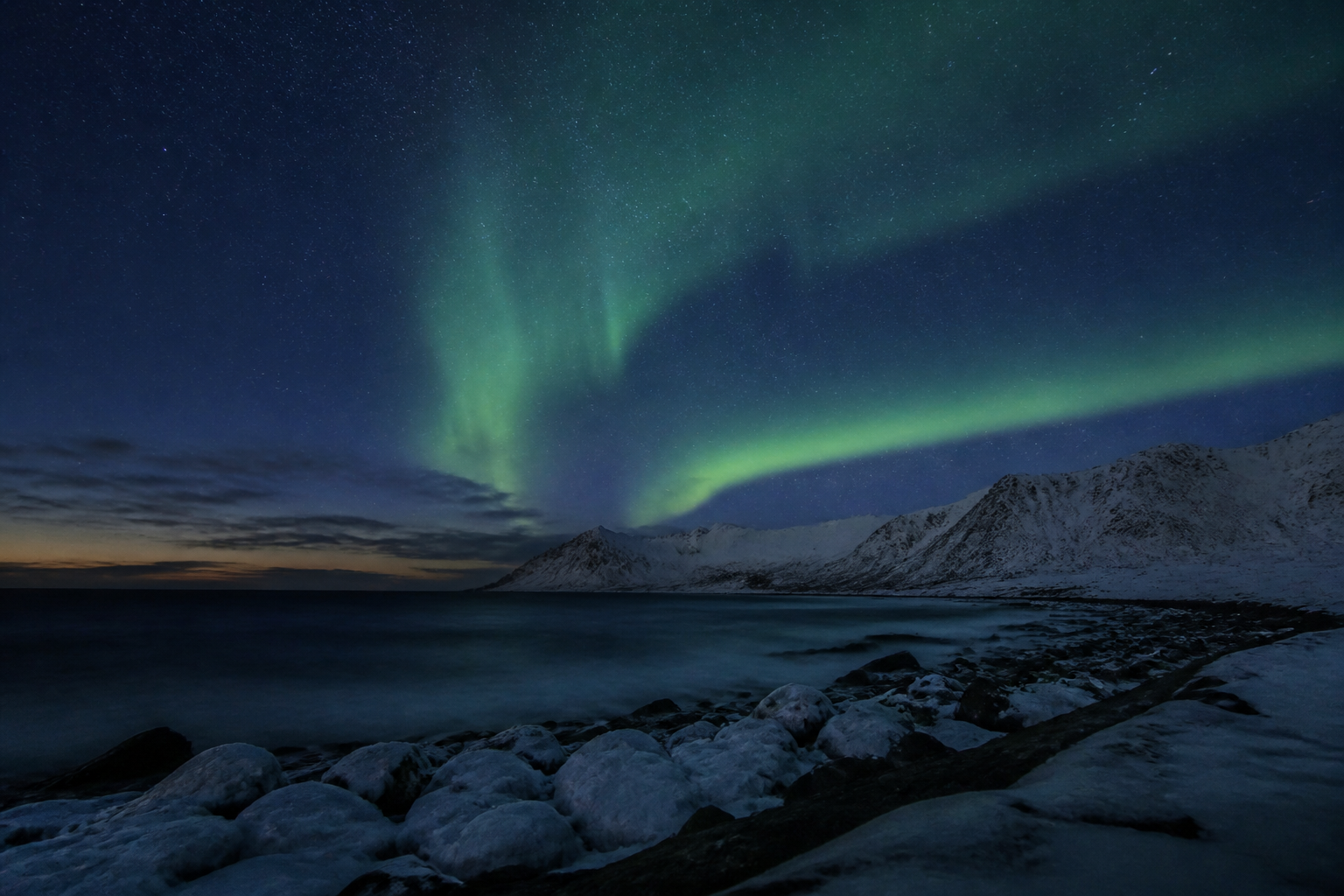
Norway pairs sharp snowy mountains with fjords and open sea. Lofoten adds fishing settlements, beaches and coastal peaks; Lyngen offers alpine scale. Tromso and Alta are aurora bases, Finnmark opens tundra settings and Svalbard adds high-Arctic atmosphere.
The country scores strongly across all five criteria, particularly visual identity, landscape variety and signature northern subjects. Its snowy coast is more changeable than Finland's interior or Japan's leading powder regions, and coastal storms can obscure both mountains and aurora. When conditions align, however, few destinations match the layering of sea, mountain, settlement and Arctic light.
Best for
- Aurora above fjords and coastal peaks
- Arctic blue-hour and low winter light
- Mountain, fishing-village and high-Arctic landscapes
Pros / Cons
- Pros: Recognisable fjord-and-mountain compositions; contrasting Arctic regions; excellent low-angle light; strong aurora and wildlife options.
- Cons: Cloud and coastal weather are persistent constraints; guiding and remote stays are costly; midwinter daylight is limited.
Practical snapshot
- Best months: December to March, choosing dates according to the desired balance of darkness, daylight, snow and specific wildlife seasons.
- Approximate seven-day ground budget: NOK 3,700–9,000 (approx. £290–£710) per person. Car hire, island transfers, specialist guides and repeated aurora outings can take the actual total well above this baseline.
- Entry requirements: See the country winter guide for current UK entry information.
What travellers say
Visitors highlight Arctic twilight and snow-covered mountains framing fjords, coast and settlements. Aurora discussions value guides' mobility when clouds cover one area. High costs and weather uncertainty recur, especially on short stays with little time to wait.
5. Canada — 9.3/10
Why it ranks here
Canada's strength is scale. Banff and Lake Louise provide Rockies scenery, frozen lakes and forests, while Whistler adds Pacific mountain snow and action. Yellowknife introduces boreal aurora, and Churchill brings an Arctic wildlife dimension.
Interior and northern snow is reliable, and wilderness atmosphere matches Russia's. Canada ranks fifth because snowy peaks, forests, frozen lakes and aurora also appear elsewhere, giving it slightly less visual uniqueness than the leaders.
Best for
- Rockies panoramas and frozen-lake scenes
- Aurora over boreal wilderness
- Winter wildlife and mountain-action photography
Pros / Cons
- Pros: Immense mountain, forest, lake and northern environments; reliable winter character; a strong landscape, wildlife and action mix.
- Cons: Signature regions are far apart; famous mountain locations can be crowded; northern or wildlife programmes are costly.
Practical snapshot
- Best months: December to March, with precise timing driven by snow, lake-ice, aurora, wildlife and desired daylight conditions.
- Approximate seven-day ground budget: CAD 690–1,900 (approx. £370–£1,010) per person. Vehicle hire, national-park accommodation and specialist northern or wildlife excursions can increase the total materially.
- Entry requirements: See the country winter guide for current UK entry information.
What travellers say
Travellers praise the Rockies' scale and the variety created by snow, frozen water and forest. Northern discussions add aurora and genuinely cold, expansive landscapes. Common concerns are long distances, severe temperatures and the cost of well-located stays or specialist tours.
6. Finland — 8.5/10
Why it ranks here
Finland offers a consistent Lapland aesthetic: snow-laden forests, frozen lakes, reindeer, cabins and aurora. Saariselka and Inari suit quieter landscapes, Rovaniemi is a developed base, and Ruka, Kuusamo or Lakeland broaden the setting.
Snow quality is among the best, supplying dependable winter foregrounds. The lower position reflects landscape variety: forests, fells and lakes are atmospheric but lack the landform contrasts of Iceland, Norway or Russia. Developed bases also reduce the sense of remoteness.
Best for
- Snow-heavy forest scenes and frozen lakes
- Reindeer, cabins and a recognisable Lapland atmosphere
- Aurora with reliably wintry foregrounds
Pros / Cons
- Pros: Dependable Lapland snow; a consistent forest-and-lake identity; strong aurora, wildlife and lifestyle opportunities; practical bases.
- Cons: Less landform variety; short midwinter daylight; familiar glass-cabin and resort imagery around popular bases.
Practical snapshot
- Best months: December to March; February and March offer substantially more daylight while retaining strong Lapland snow.
- Approximate seven-day ground budget: EUR 525–1,270 (approx. £450–£1,090) per person. Remote cabins, repeated aurora outings and wildlife or sledding sessions can move costs beyond the baseline.
- Entry requirements: See the country winter guide for current UK entry information.
What travellers say
Visitors praise deep snow, quiet forests and the contrast between white landscapes and dark skies. Reindeer, huskies, sauna and cabins broaden the story beyond aurora. Short midwinter daylight and premium accommodation or organised shoots are recurring drawbacks.
FAQ
Which country is best for winter landscape photography?
Iceland ranks first because glaciers, ice caves, black coasts and volcanic or geothermal landforms create exceptional variety. Russia is stronger for vast wilderness and specialised ice or volcanic subjects; Japan combines expressive snow with culture and wildlife.
Where is best for ice photography?
Lake Baikal stands out for transparent ice, cracks, pressure ridges and caves. Iceland offers glaciers, seasonal caves, icebergs and dark volcanic surroundings. Both require current local assessment because safe access cannot be inferred from appearance.
Which destinations are best for snowy mountain photography?
Japan is exceptional for powder-laden forests and ski mountains, Norway for sharp peaks above fjords, and Canada for the monumental Rockies. Kamchatka adds the most unusual mountain subject through snow-covered volcanic cones, although reaching the best terrain may require specialist transport and guidance.
Where can I photograph Arctic light and northern winter landscapes?
Northern Norway, the Kola Peninsula, Finnish Lapland and Canada's northern regions all combine long twilight, aurora potential and snowy foregrounds. Norway is strongest for fjord and coastal compositions, Kola for tundra and Arctic-coast character, Finland for forests and frozen lakes, and Canada for boreal scale.
When should I travel for winter photography?
There is no single best month for every subject. January and February suit deep snow in Japan, February and March are the main Baikal ice window, and late winter gives Finland and northern Norway more daylight while retaining snow. Iceland requires a balance between winter access, darkness and weather, so plans should include flexible days rather than rely on one exact forecast.
Sources & notes
The comparison uses official climate and tourism information, existing destination records and previously collected winter traveller discussions. Key factual references include:
- Icelandic Met Office climate report
- Visit Reykjavik seasonal guide
- Russian Geographical Society: winter Lake Baikal
- Lake Baikal nature information
- Lake Baikal winter tour price examples
- Kamchatka travel guide
- Murmansk regional tourism information
- Altai winter tourism information
- Japan National Tourism Organization: skiing
- Visit Tromso: winter
- Environment and Climate Change Canada climate normals
- Finnish Meteorological Institute: seasons in Finland
- Cost baselines: Iceland, Japan, Norway, Canada and Finland
- Lake Baikal winter images traveller discussion
- Winter traveller reports: Iceland, Japan, Norway, Canada and Finland
Budgets are broad ground-cost benchmarks rather than quotes. Seasonal timing, internal transport, accommodation, specialist guiding and weather-related changes can materially affect the final cost.
GBP equivalents are approximate and use exchange rates checked on 20 August 2026. Actual exchange rates may vary.