Lake Baikal at a glance
| Best months | February to March for the established ice season; late January can be transitional |
| Typical temperature | About -15 to -30°C during the core season, with colder spells and variation by basin, wind exposure and proximity to open water |
| Ice and snow conditions | Broad cover usually develops by mid- to late January, but ice can be clear, cracked, ridged or snow-covered; thickness and safety are not uniform |
| Aurora relevance | Limited / not a core reason to visit — transparent ice and Siberian landscapes define the trip |
| Approximate five-day ground budget | RUB 55,000–120,000 (approx. £480–£1,040) per person from Irkutsk |
| Main gateway | Irkutsk for Listvyanka, Olkhon Island and the Small Sea |
| Best for | Transparent ice, caves, pressure ridges, frozen-lake travel, Olkhon and winter photography |
Why visit in winter?
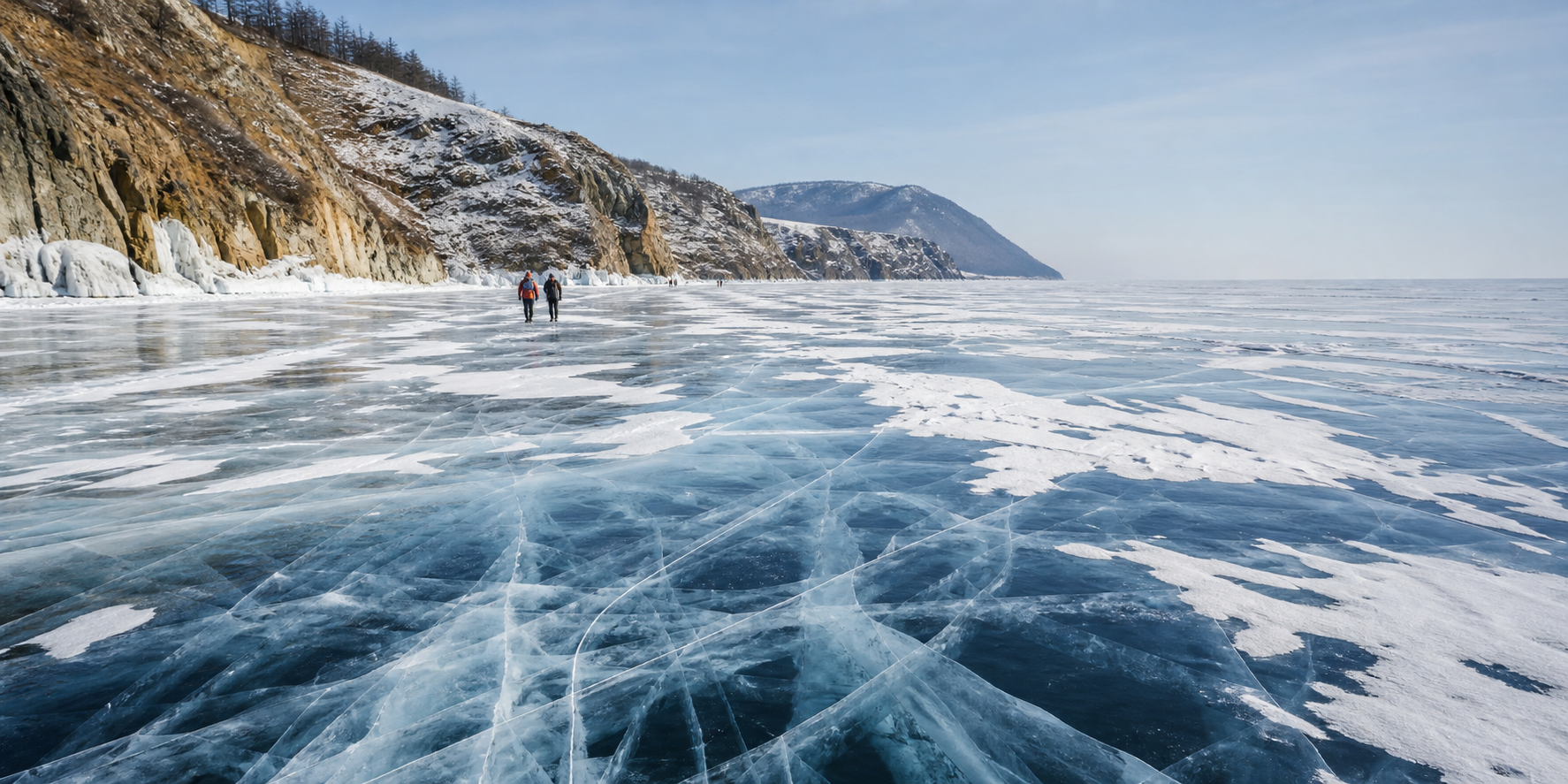
Baikal's winter value comes from the scale and variety of the ice. In suitable conditions, the surface can reveal clear sections, deep cracks, pressure ridges and frozen shoreline formations. Snow-covered areas and rough ice create a different appearance, so the lake should be understood as a changing environment rather than one guaranteed transparent sheet.
Olkhon Island and the Small Sea are the main focus for a longer ice journey, while Listvyanka provides a closer introduction from Irkutsk. Ice caves, cliffs, islands and taiga give photographs context beyond surface detail. Siberian and Buryat food or cultural experiences can broaden the trip away from the lake itself.
The gateway choice changes the depth of the itinerary. Listvyanka can introduce the lake without the longer Olkhon transfer, whereas the Small Sea and island routes place more emphasis on extended ice travel and changing shoreline formations. The experiences overlap, but they are not identical versions of the same short excursion.
The destination rewards precise timing and local organisation. Late January may still be transitional, while February and March are the established specialist season in the current record. Even then, open water, thin areas and changing crossings remain possible. Current local knowledge determines where walking, driving or skating can take place.
Strengths: globally distinctive ice formations; exceptional photography; a combination of frozen lake, cliffs, islands and taiga; several itinerary styles from Irkutsk; and a clearly defined February–March focus.
Trade-offs: variable ice formation and access; severe cold and wind; long transfers to Olkhon or the Small Sea; a relatively short specialist season; and high costs for private ice transport or premium programmes.
Best winter experiences
- Photograph transparent Baikal ice: Clear sections, cracks and bubbles can create remarkable detail, but appearance varies by place and timing.
- Explore caves and pressure ridges with a guide: Shoreline formations and broken ice are among the lake's strongest signature subjects.
- Travel to Olkhon Island and the Small Sea: These areas provide the main multi-day ice-landscape focus.
- Use snowmobiles or suitable local ice transport: Movement should follow currently authorised routes and operator guidance.
- Try dog sledding: This adds an active winter experience beyond vehicle-based lake travel.
- Skate where local conditions are confirmed suitable: A visually clear surface does not by itself establish safe skating conditions.
- Visit Listvyanka and the Baikal Museum: These provide a closer gateway experience and context for the lake.
Ice, snow and winter conditions
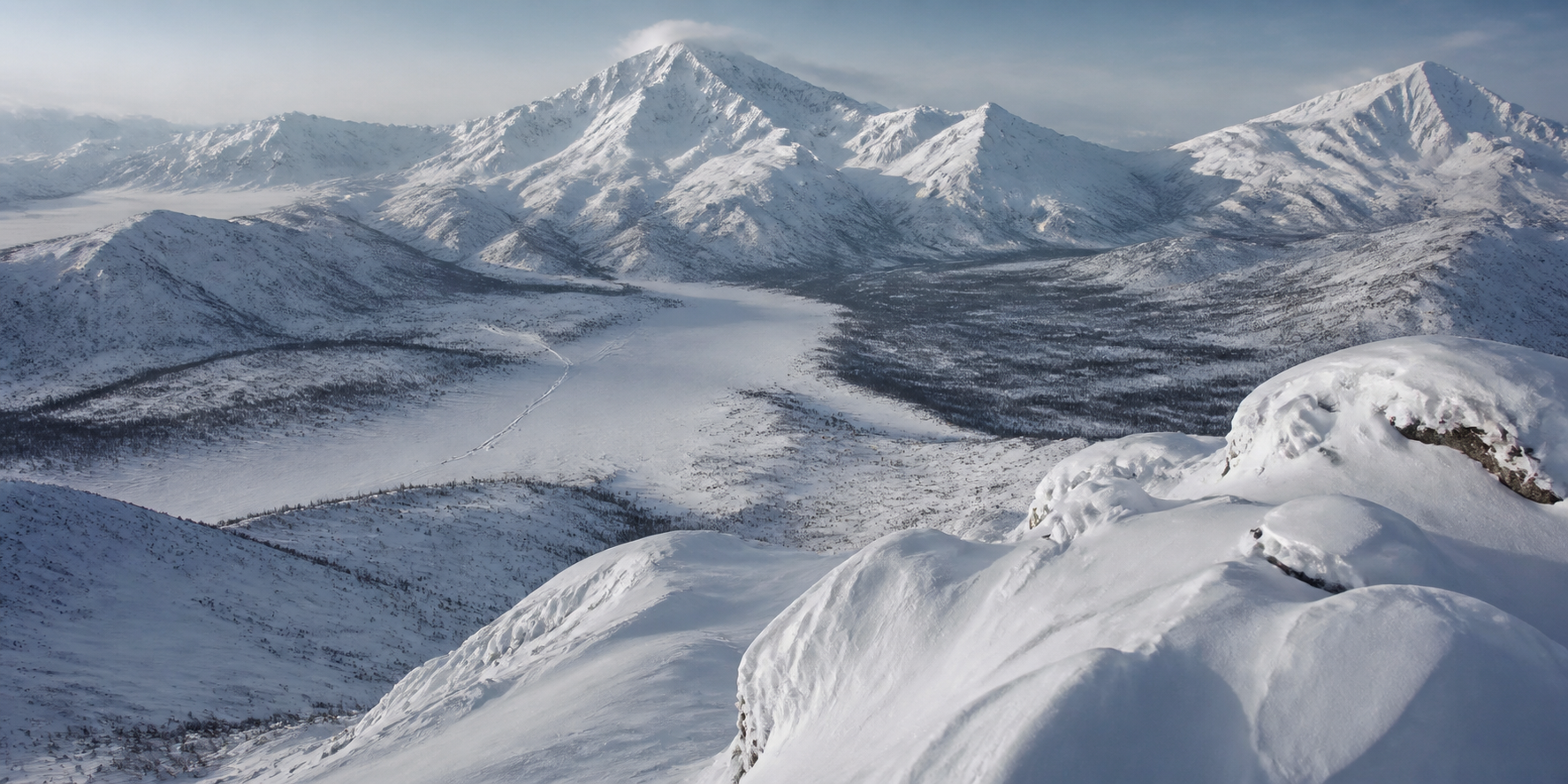
Baikal usually develops broad ice cover by mid- to late January, though timing varies. Ice thickens through winter and may appear clear, cracked, ridged or snow-covered. Wind redistributes snow, and conditions differ between basins, shorelines and areas near open water.
There is no single uniform safe thickness. Open-water or thin-ice sections can persist, and an authorised crossing in one area does not establish safety elsewhere. The page therefore does not promise clear ice or independent access. Use current local information, authorised routes and experienced operators.
Visual appearance is equally local. Snow can cover otherwise clear sections, pressure ridges continue to form and wind changes the surface. Photographs from one bay or week cannot confirm what another part of the lake will look like, even during the February–March core season.
Typical February–March conditions are about -15 to -30°C, with colder spells possible. Exposed wind can limit time outside and affect photography or other activities. Aurora are classified as limited / not a core reason to visit: displays may occur during strong geomagnetic activity, but they are not dependable enough to define the trip.
Best time to visit
February to March is the core period for established ice. Late January can be transitional, meaning that some routes may not be operational or may look different from later winter.
The exact balance changes within the season. Fresh snow can cover clear surfaces, cracks and ridges continue to evolve, and local access decisions respond to current conditions. Plan the trip around the season rather than one guaranteed visual effect.
How to get there
Irkutsk is the main air and rail gateway for the western shore. Listvyanka is about 65 km away by road, making it the closer lake destination in the record.
Olkhon Island and the Small Sea require a longer road transfer. Winter movement onto or across the ice should use only currently authorised crossings and experienced local operators. The road journey and lake access are substantial parts of the itinerary rather than minor transfers.
This is why Irkutsk should be treated as the gateway, not the final winter destination. A five-day plan must allocate enough time to reach the selected shore and return, especially when Olkhon is the centre of the trip.
Winter costs
The established five-day ground benchmark is RUB 55,000–120,000 (approx. £480–£1,040) per person, starting from Irkutsk. It covers a shared winter itinerary towards Listvyanka, Olkhon or the Small Sea, depending on the selected programme.
Private ice expeditions and premium accommodation can cost substantially more. Guided transport is a central safety and logistical component, not an optional luxury that can automatically be removed to match the lower Russia country baseline. International flights are excluded.
What travellers say
Travellers frequently praise Baikal's clear ice, caves, pressure ridges and immense open scale, often identifying Olkhon as the highlight. Ice driving, walking and photography are regularly described as the most unusual parts of the experience.
The recurring concern is timing and logistics. The dependable ice season is short, Olkhon involves a long transfer, popular dates can fill and safe access must be arranged locally. The sentiment is drawn from existing forum, photography and tour-review discussions without creating quotations or implying that every visitor sees identical conditions.
How this destination fits into a Russia winter trip
Choose Lake Baikal within a Russia winter holiday when ice, photography and a February–March frozen-lake journey matter most. Choose Kola Peninsula & Murmansk for strong aurora potential and Arctic coast; Kamchatka for volcanic freeride and thermal springs; Altai & Siberia for mountain roads and continental scenery; or Karelia for forests, lakes and a more varied cultural programme.
Baikal is a specialist ice trip rather than a general substitute for all Russian winter landscapes. It lies far from the other four destinations and normally deserves its own itinerary centred on Irkutsk.
Compared with Kamchatka, the trip is less focused on steep snow sport but equally dependent on specialist local judgement. Compared with Karelia, Baikal offers a more singular ice objective and a narrower optimal season.
Relevant comparisons: Best Winter Photography Destinations, Best Snow Destinations, Best Winter Wilderness Destinations and Best Winter Destinations.
FAQ
When does Lake Baikal freeze?
Broad ice cover usually develops by mid- to late January, but timing varies across the lake. Late January can remain transitional, so access must follow current local information.
When can I see clear ice at Lake Baikal?
February and March are the core months for established ice, but clear surfaces are not guaranteed. Snow, wind, cracks and regional differences affect appearance throughout the season.
Is it safe to walk on Lake Baikal in winter?
Only where current local authorities and experienced operators confirm an authorised route. Thickness is not uniform, and open water or thin ice can persist even when nearby areas look solid.
What is the best month for Lake Baikal in winter?
February and March are the most reliable broad answer. Choose exact dates with the understanding that ice appearance and access still change from week to week.
How cold is Lake Baikal in winter?
Typical conditions during the February–March ice season are about -15 to -30°C, with colder spells possible. Wind exposure and proximity to open water change how conditions feel.
How much does a five-day Lake Baikal trip cost?
The benchmark is RUB 55,000–120,000 (approx. £480–£1,040) per person from Irkutsk. Private ice travel and premium accommodation can push the cost higher.
Can I see the Northern Lights at Lake Baikal?
Aurora are possible during strong geomagnetic storms but are classified as limited and not a core reason to visit. Choose Baikal for ice and Siberian landscapes, not a dependable aurora trip.
Sources & notes
Facts and traveller sentiment were checked on 20 August 2026. This page uses only the existing Lake Baikal sources:
- Russian Geographical Society: winter journey to Lake Baikal
- Climate and nature of Lake Baikal
- Winter Baikal Experience
- Baikal tours 2026 cost benchmarks
- NOAA Space Weather Prediction Center: aurora context
- Lake Baikal winter traveller discussion
- Lake Baikal winter photography discussion
- Winter Olkhon traveller reviews
GBP equivalents are approximate and use exchange rates checked on 20 August 2026. Actual exchange rates may vary.