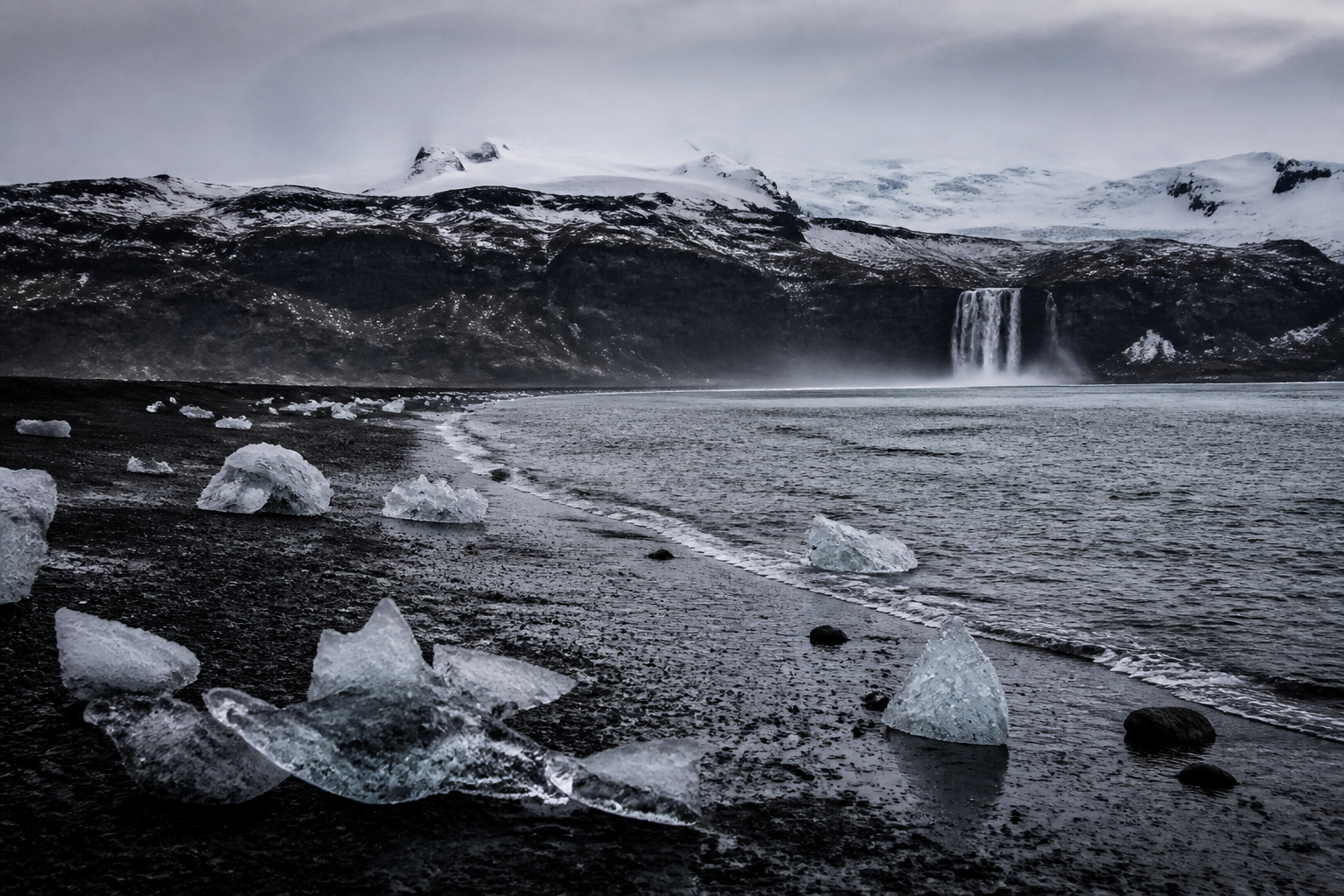
Kamchatka at a glance
| Best months | January to April for deep snow, snowmobiles, freeride and hot springs; March and April generally provide longer daylight |
| Typical temperature | About -5 to -15°C around Petropavlovsk-Kamchatsky, Yelizovo and the southeast coast; inland valleys and high terrain can be much colder |
| Snow conditions | Deep maritime snow from December into April or May; heavy accumulation is characteristic, while storms and wind can rapidly alter access |
| Aurora relevance | Limited / not a core reason to visit — volcanoes, snow and geothermal experiences define the trip |
| Approximate five-day ground budget | RUB 60,000–150,000 (approx. £520–£1,300) per person from Yelizovo or Petropavlovsk-Kamchatsky |
| Main gateway | Yelizovo Airport, followed by road transfer to Petropavlovsk-Kamchatsky, Yelizovo or Paratunka |
| Best for | Volcanic snowscapes, freeride, ski touring, snowmobiles, thermal pools and specialist wilderness adventure |
Why visit in winter?
Kamchatka's winter proposition is unusually concentrated: deep snow sits around active-volcanic landscapes, while geothermal water creates a strong contrast after a cold day outside. Avachinsky, Koryaksky, Vilyuchinsky and other volcano views give the region a recognisable identity even when an itinerary does not reach the most remote terrain.
The principal experiences are active rather than observational. Snowmobile journeys, freeride, ski touring, dog sledding and winter landscape photography use the snowpack and terrain as the basis of the trip. Paratunka and other thermal-spring areas add outdoor bathing, while geothermal and fumarole locations may be included when routes are operational.
The practical bases support different parts of that programme. Petropavlovsk-Kamchatsky provides the main urban setting, Yelizovo sits by the airport gateway and Paratunka is closely associated with thermal-water stays. None removes the need for specialist onward travel when volcano slopes, remote valleys or trackless snow are the objective.
This is also the destination where the distinction between an appealing image and a practical itinerary matters most. Remote valleys and volcano approaches commonly need four-wheel-drive vehicles, snowmobiles, tracked vehicles or helicopters through organised operators. Weather can change the route, prevent flying or replace an ambitious day with a more accessible alternative.
Strengths: a rare combination of volcanoes and deep snow; exceptional freeride and snowmobile terrain; winter geothermal bathing; large-scale wilderness near the main urban gateway; and a long specialist operating season.
Trade-offs: high costs for guiding and transport; limited ordinary public access to remote sites; major weather dependence; and the need for specialist vehicles or qualified support for the strongest experiences.
Best winter experiences
- Snowmobile towards volcanoes and mountain passes: Specialist vehicles open terrain that ordinary road transport cannot reach in winter.
- Freeride or ski tour with qualified local guides: Deep snow and volcanic slopes create Kamchatka's defining adventure, with route choice governed by current conditions.
- Bathe in outdoor thermal water: Paratunka and other thermal areas provide the clearest hot-and-cold contrast.
- Photograph winter volcanoes: Views of Avachinsky, Koryaksky, Vilyuchinsky and other peaks are central even on less technical itineraries.
- Try dog sledding: This adds a lower-terrain activity to a programme otherwise dominated by snowmobiles and mountain objectives.
- Explore Pacific-coast winter landscapes: The coast broadens the visual setting beyond volcanoes.
- Visit geothermal or fumarole areas when operational: Access depends on the selected route, current weather and operator capability.
Snow and winter conditions
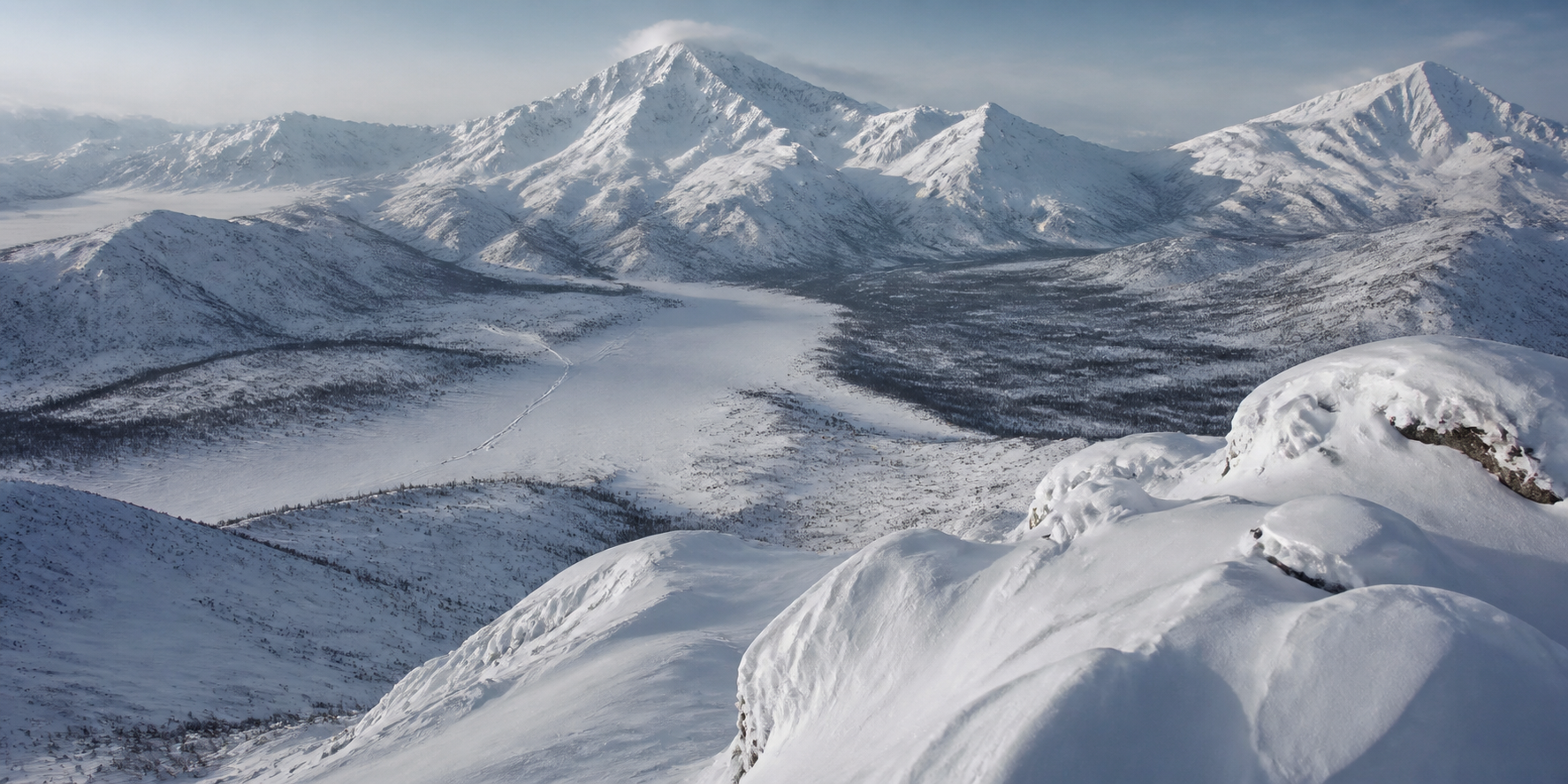
Kamchatka's southeast has a deep maritime snowpack, supporting winter activity from December into April or May. Heavy accumulation is one of the destination's defining strengths, particularly around the mountains. The same weather systems that produce snow can bring wind, storms and poor visibility.
Conditions are not uniform. Petropavlovsk-Kamchatsky, Yelizovo and the southeast coast typically sit around -5 to -15°C, while high terrain and inland valleys can be substantially colder. Snow quality and stability also change with elevation, exposure and warming later in spring.
Deep accumulation does not mean every day produces the same powder experience. Wind can redistribute snow, storms reduce visibility and later-season warmth changes surface conditions. Guides and operators use current information to select an objective; a fixed list of volcano routes should therefore be treated as provisional rather than promised.
Aurora classification is limited / not a core reason to visit. Displays are possible during sufficiently strong geomagnetic activity, especially farther north, but the principal visitor base is outside the most dependable auroral zone. Kamchatka should be chosen for volcanoes, snow and geothermal experiences rather than a promised Northern Lights trip.
Best time to visit
January to April is the core winter window. January and February emphasise deep winter, while March and April generally bring longer daylight for mountain and snowmobile objectives. The broader snow season may extend beyond these dates, but specific activities depend on operator schedules and current conditions.
Later winter does not remove uncertainty. Warming spring snow can affect skiing, and poor flying weather can shorten or cancel helicopter-supported programmes. Choose a period according to the principal activity and retain contingency time.
A snowmobile-led itinerary and a helicopter-led ski programme may therefore favour different operational windows within the same broad season. The existing evidence supports January to April, not one universally superior week.
How to get there
Yelizovo Airport is the main gateway. From there, road transfers connect to Petropavlovsk-Kamchatsky, Yelizovo and Paratunka, which serve as the practical bases for accommodation and organised departures.
Winter access beyond the main road network commonly continues by four-wheel-drive vehicle, snowmobile, tracked vehicle or helicopter. The transport method is part of the programme rather than a minor final connection. Travellers should not assume that a volcano visible from the city is independently accessible in winter.
Helicopter access is especially sensitive to visibility and wind. Ground-based alternatives can preserve an active day when flying is impossible, but they may reach different terrain. A credible itinerary needs operator-led contingency choices rather than treating each transport mode as interchangeable.
Winter costs
The established five-day ground benchmark is RUB 60,000–150,000 (approx. £520–£1,300) per person, starting from Yelizovo or Petropavlovsk-Kamchatsky. The range reflects different accommodation levels and shared excursions.
Helicopter trips, heli-skiing and private snowmobile programmes can cost far more. The benchmark excludes international flights and is not a quote for a premium specialist expedition. Weather can also change which paid activities operate, so programme terms and flexibility matter.
What travellers say
Travellers frequently praise Kamchatka's deep powder, volcano views and the contrast of skiing or snowmobiling followed by outdoor thermal pools. Remote, trackless terrain and helicopter access are often described as the most unusual elements of the trip.
The repeated practical issue is cost combined with weather dependence. Poor flying conditions can reduce helicopter programmes, and warming spring snow can change surface quality. These observations come from existing snowboarding, accommodation and ski-forum discussions; they are aggregated rather than quoted directly.
How this destination fits into a Russia winter trip
Choose Kamchatka within a Russia winter holiday when volcanic terrain, deep snow and specialist adventure are the priorities. Choose Kola Peninsula & Murmansk instead for a more aurora-led Arctic itinerary; Lake Baikal for clear ice and frozen-lake photography; Altai & Siberia for continental mountains with a lower entry-level budget; or Karelia for a gentler forest, lake and cultural programme.
Kamchatka is the most demanding of the five destinations in cost, specialist transport and weather flexibility. It is normally a separate trip rather than an add-on to Kola, Baikal, Altai or Karelia, all of which are far away.
It also offers the clearest combination of snow adventure and geothermal recovery. Travellers who prefer a reliable city base with easier shared excursions may find Kola or Karelia more suitable, while those accepting uncertainty gain access to a more distinctive volcanic environment.
Relevant comparisons: Best Winter Adventure Destinations, Best Snow Destinations, Best Winter Photography Destinations and Best Winter Wilderness Destinations.
FAQ
Is Kamchatka worth visiting in winter?
Yes, for travellers prioritising volcanoes, deep snow, snowmobiles, freeride and thermal springs. It requires more specialist planning and weather flexibility than the other Russian winter destinations.
Can I ski near volcanoes in Kamchatka?
Yes, guided freeride and ski touring are core winter experiences. Route choice, transport and operating decisions depend on current snow, weather and professional assessment.
What are the best months for Kamchatka in winter?
January to April is the main period for deep snow and specialist activities. March and April provide more daylight, though spring warming and flying weather can still affect programmes.
How cold is Kamchatka in winter?
Typical conditions around the main southeast bases are about -5 to -15°C. Inland valleys and high mountain terrain can be substantially colder.
How expensive is a five-day Kamchatka winter trip?
The benchmark is RUB 60,000–150,000 (approx. £520–£1,300) per person from the main gateway area. Helicopter, heli-ski and private snowmobile programmes can cost far more.
Can I visit Kamchatka's volcanoes independently in winter?
Remote volcano routes should not be treated as ordinary independent day trips. Access commonly needs guides and suitable four-wheel-drive, snowmobile, tracked or helicopter transport.
Can I see the Northern Lights in Kamchatka?
Aurora are possible but classified as limited and not a core reason to visit the main southern visitor area. Choose Kola when a dependable aurora-oriented destination is the priority.
Sources & notes
Facts and traveller sentiment were checked on 20 August 2026. This page uses only the existing Kamchatka sources:
- Kamchatka travel guide
- Kamchatka thermal springs
- NOAA Space Weather Prediction Center: aurora context
- Kamchatka tour price list 2026
- Kamchatka snowboarding discussion
- Snow Valley winter traveller reviews
- Kamchatka heli-skiing discussion
GBP equivalents are approximate and use exchange rates checked on 20 August 2026. Actual exchange rates may vary.